
APAC AI Impact vs. Hype in Finance 2026
Share


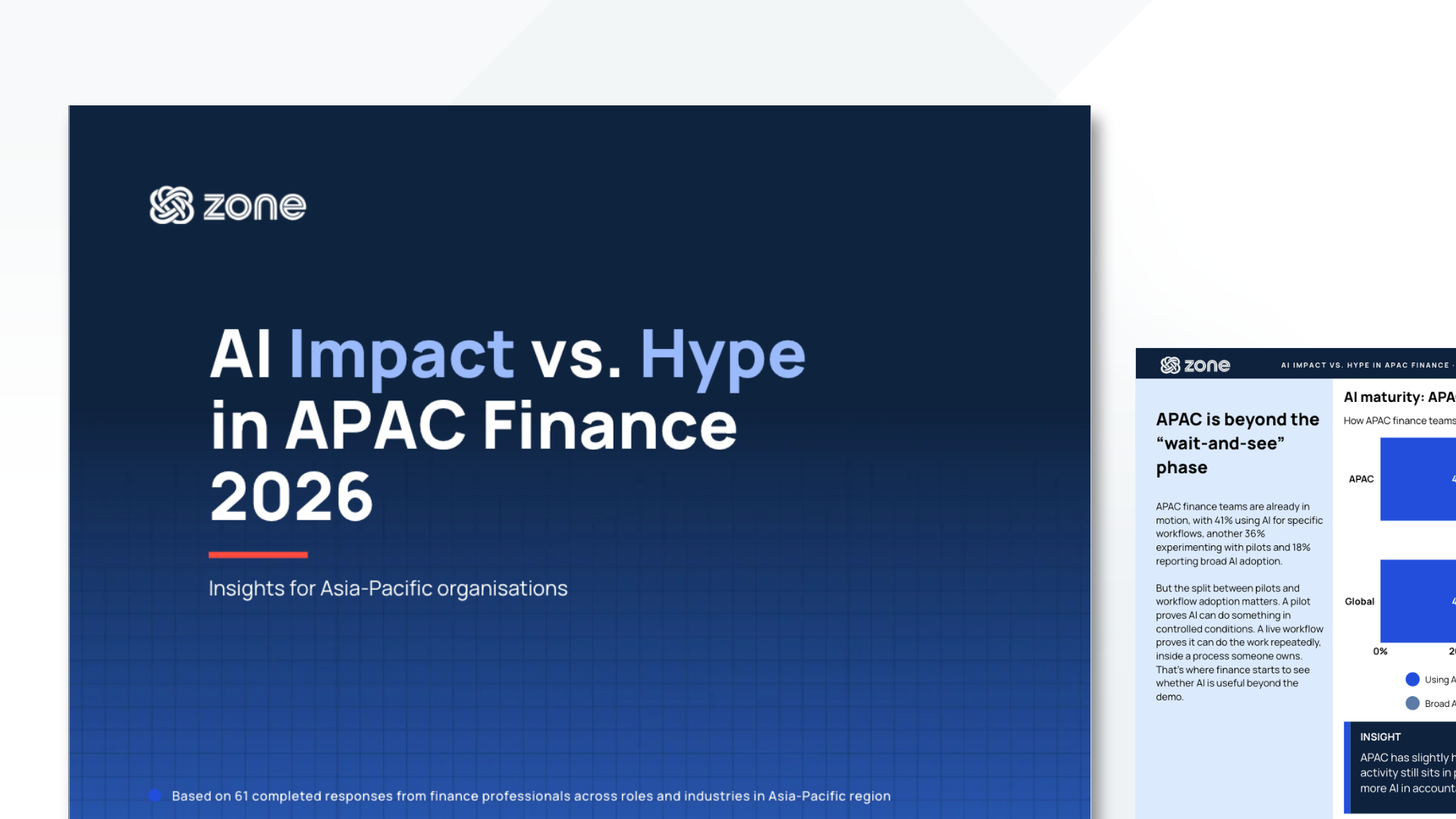
APAC finance teams are not waiting for AI to mature somewhere else first. In our APAC respondent data, 95% are experimenting with or using AI. Most are either applying AI to specific finance workflows or testing it through pilots. A smaller group has moved further, with 18% reporting broad AI adoption compared with 15% globally in our AI Impact vs. Hype in Finance 2026 report.
APAC teams are testing AI in work they already know: reporting, approvals, AP invoice processing, reconciliation and close. These workflows have familiar inputs, defined processes and outputs finance can check. But APAC also shows the cost of getting it wrong. When AI underdelivers, 51% of APAC respondents say the biggest impact is more work to correct or reconcile data. Globally, that figure is 43%.
The lesson is that AI needs to work inside finance processes with enough structure, ownership and traceability to stand up when the numbers matter.
Key highlights
- 95% of APAC respondents are already experimenting with or using AI.
- 18% report broad AI adoption, compared with 15% globally.
- 56% say reporting and analysis is where AI has delivered the most tangible benefit.
- 51% say failed AI initiatives create more correction or reconciliation work for finance.
- 82% of APAC broad adopters report high confidence in ERP-native AI.
The clearest APAC wins are in practical workflows
APAC respondents are seeing the strongest AI gains in work finance already understands. Reporting and analysis leads at 56%, followed by approvals and workflows at 43%, AP invoice processing at 39%, reconciliation and close at 38% and forecasting and planning at 36%. Theyse workflows sit inside the daily work of finance. The inputs are known, the process has rules, outputs can be validated against the ERP, source documents, approval paths or reporting logic. AI creates more value when it reduces the manual effort around a trusted process, not when it asks finance teams to trust a black box.
When AI underdelivers, finance absorbs the cleanup
The APAC data is clear on the cost of failed AI. The most common impact is not a missed innovation target or a vague productivity gap. It is more work for finance: our survey shows that 51% of APAC respondents say the biggest business impact of an AI initiative falling short is increased workload to correct or reconcile data. A tool may complete the task, but if the output needs to be checked line by line, corrected manually or reconciled back to the system of record, the work has not disappeared. It has moved. AI that operates outside the workflow can create another layer to manage. AI that stays close to the ERP gives finance a better chance to review, trace and act on the output before it becomes another close-cycle problem.
ERP-native AI confidence rises when AI gets closer to the work
APAC finance teams become more confident when AI moves from controlled testing into real finance workflows, closer to the data and controls they already rely on. Among APAC respondents, 36% of pilot-stage teams report high confidence in ERP-native AI. That rises to 52% among teams using AI in specific workflows and 82% among broad adopters.
A generic AI tool can produce an answer. But can finance trace where that answer came from? Can the team see what changed, what was approved and what still needs review? If not, the burden shifts back to finance. That's why ERP-native AI matters in APAC. Confidence grows when AI operates inside the system of record, where outputs can be validated against the same data finance uses to close, report and explain the numbers.
FAQs



Get a Personalized Demo Today
Start a conversation with an expert who asks thoughtful questions and shows you how Zone & Co can solve your unique problem.