
Template: Business Requirements Document (BRD) for billing & ERP systems
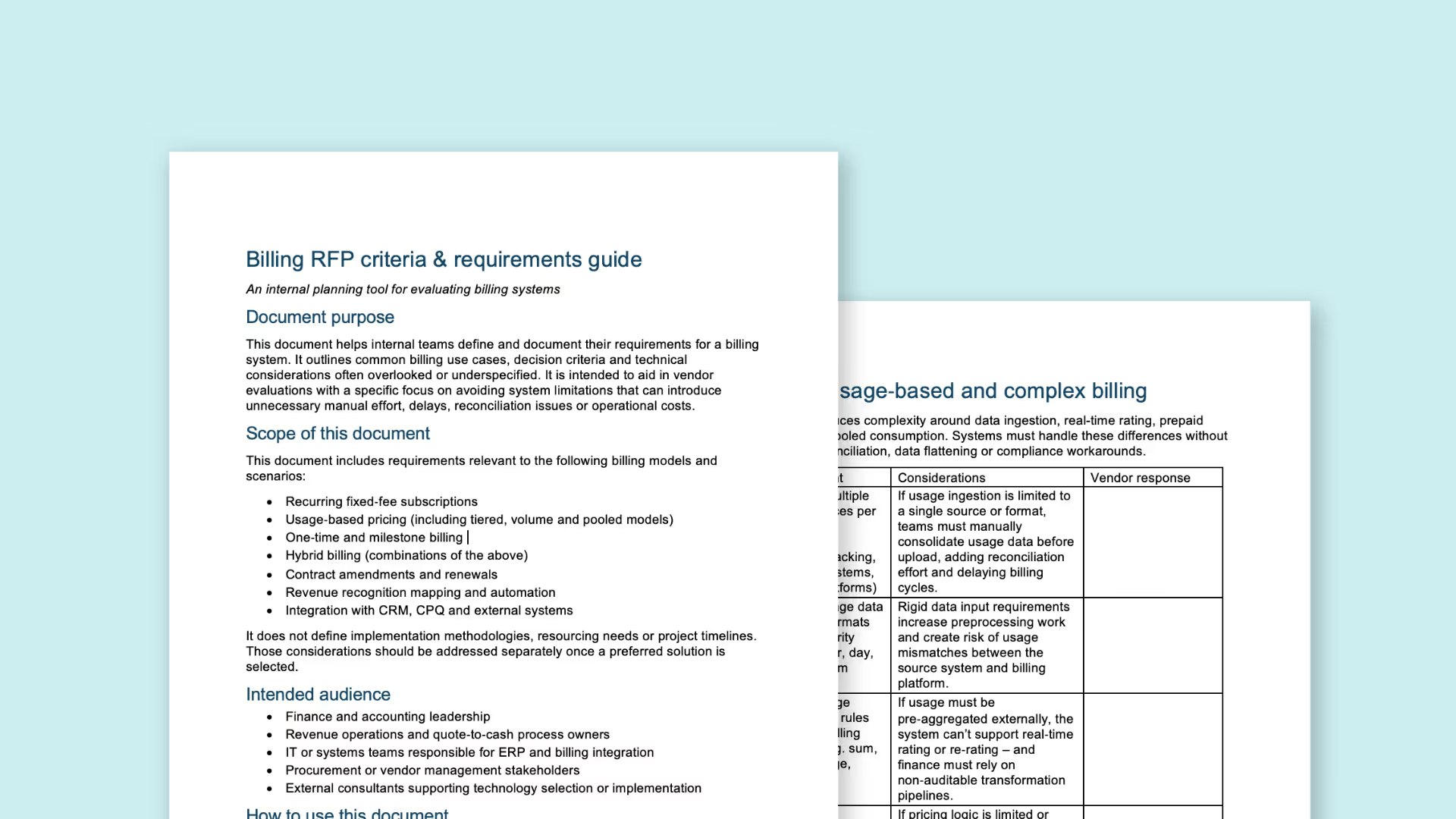
Most teams rush into billing system evaluations with a few demo questions, a partial list of requirements and an urgent pain point. That’s how billing and subscription management systems get mis-scoped, customized beyond recognition or replaced within 18 months.
Your billing system decision determines how much risk – and how much manual effort – finance carries. This purpose-built business requirements document (BRD) gives you a proven checklist to surface gaps before they become costly.
What’s inside:
- General system requirements: architectural fit, global support, governance
- Contract and subscription management: mid-term changes, renewals, ramps
- Usage and hybrid billing: ingestion, pooling, caps, top-offs
- Invoicing and AR: cash application, dunning, collections inside NetSuite ERP
- Revenue recognition: ASC 606 compliance, consumption vs invoice timing
- CRM/CPQ integration: handling amendments and audit chains cleanly
- Future-proofing: scaling without reimplementation
What is a Business Requirements Document (BRD) for billing systems?
A Business Requirements Document (BRD) is more than a checklist. It’s the strategic blueprint that guides how your organization implements or optimizes NetSuite billing. It connects business goals to system functionality, translating how finance operations should run into clear, structured requirements that ERP vendors can actually deliver on.
In the context of billing, subscription management and revenue recognition, a BRD gives finance and operations teams a common language. It helps define what success looks like before any demos, proposals or integrations begin. That clarity keeps projects on track and prevents the costly rework that comes from mismatched expectations later on.
Within NetSuite, a well-defined BRD anchors your system design — from how billing schedules and contract changes are automated to how revenue recognition aligns with ASC 606. For teams evaluating options like SuiteBilling or Salesforce Billing, the same document ensures each system is assessed against consistent, business-driven criteria rather than technical guesswork.
In short, a BRD aligns stakeholders, minimizes risk and creates a scalable foundation for automated finance operations inside NetSuite ERP — where every billing event, revenue stream and subscription change is tracked, recognized and reported accurately.
Build best practices into your system requirements
The most effective teams document success in practical terms – tied to the issues, workflows and constraints that impact business.
What we’ve seen work:
- Frame requirements around actual scenarios, not just feature checklists
- Add edge cases and future needs that might break the system
- Provide considerations that prompt clear, specific answers
- Apply a consistent scoring method across vendors
- Capture it in a format that’s easy to share or drop into an RFP
That’s what a BRD is for. It provides a templated approach you can reuse, refine and rely on – across vendors, across teams.
What this billing BRD helps you catch before vendor selection
A well-structured BRD creates: a shared, complete understanding of what the system needs to do – and the confidence to know when a vendor can actually deliver it.
This billing BRD helps surface the gaps vendors don’t tell you upfront – the workflows, contract edge cases and reporting requirements that decide whether a system will scale cleanly inside NetSuite or create more manual work around it.
It helps you catch issues like:
- Mid-term contract changes that look simple in a demo but break billing logic in production. Think upgrades, downsells, co-terms, ramps, renewals and partial-term amendments. Can the system handle those natively, or does finance end up rebuilding the logic in spreadsheets?
- Usage and hybrid pricing requirements that don’t fit neatly into standard subscription workflows. If your model includes consumption, prepaid credits, minimum commitments, caps or overages, where does that logic actually live?
- Revenue recognition gaps hiding behind invoice-first billing design. A vendor may say it supports ASC 606. But can it handle billing and revenue timing separately when usage, milestones or contract changes don’t line up with the invoice?
- CRM, CPQ and ERP handoff points where data gets distorted. What happens when a sales amendment comes through Salesforce or CPQ? Does that change flow cleanly into NetSuite billing and revenue, or does someone on the finance team need to interpret what sales meant?
- Manual work masked as “configuration.” Some tools technically support complex billing scenarios, but only with custom scripts, offline calculations or heavy admin overhead.
- Future-state requirements that are easy to ignore when today’s pain feels urgent. Global expansion, entity growth, new pricing models, acquisitions and tighter audit expectations tend to show up fast. Will the system still fit 12 to 24 months from now?
Download the billing system BRD
Mid-term amendments that trigger cancel-rebook. Usage data that needs massaging through spreadsheets before it can be billed. Revenue tied to invoice timing instead of consumption. These are the issues some billing systems create – even the ones bundled with ERP platforms like NetSuite. They often aren’t built to handle complex contracts, variable usage and revenue recognition compliance in one place.
This BRD for billing and subscription management helps finance teams identify those risks early and look for the right capabilities – before they start meeting with ERP vendors.
Download the billing system BRD today.
Build from a smarter foundation
This billing BRD template is one example of how structured thinking changes the outcome of system evaluations. It helps teams define what success looks like early, compare ERP vendors like NetSuite, SuiteBilling and Salesforce Billing on equal terms, and uncover risks before they create costly rework.
We’ve spent decades working alongside finance teams through system selections and implementations – seeing where requirements were missed, where assumptions broke down, and how much effort those gaps created later. That experience shaped how we built this BRD for billing and subscription management, so teams can capture what matters upfront and move forward with confidence.



Get a Personalized Demo Today
Start a conversation with an expert who asks thoughtful questions and shows you how Zone & Co can solve your unique problem.