


New data suggests that some purchases reach finance early, while others are well underway before finance hears about them.
When we surveyed over 250 finance leaders, 65% identified at least three types of non-payroll spend that are hard to see before the company commits. More than one third identified at least four. For most teams, that’s several spending categories where the money may be spoken for before finance hears about it.
An operations team hiring a consultant may have picked the firm and scoped out the work. A marketing team buying a new analytics tool may already have agreed on pricing and terms. In both cases, finance would want to know whether an existing contract covers it, or whether this quarter’s budget has room for it. But by the time these requests arrive, the purchases have essentially been made – without finance’s input and without time to act.
Where are the spending blind spots for finance teams?
Finance teams are struggling to see purchases early across various categories like travel, professional services, software, hardware, legal services and renewals.
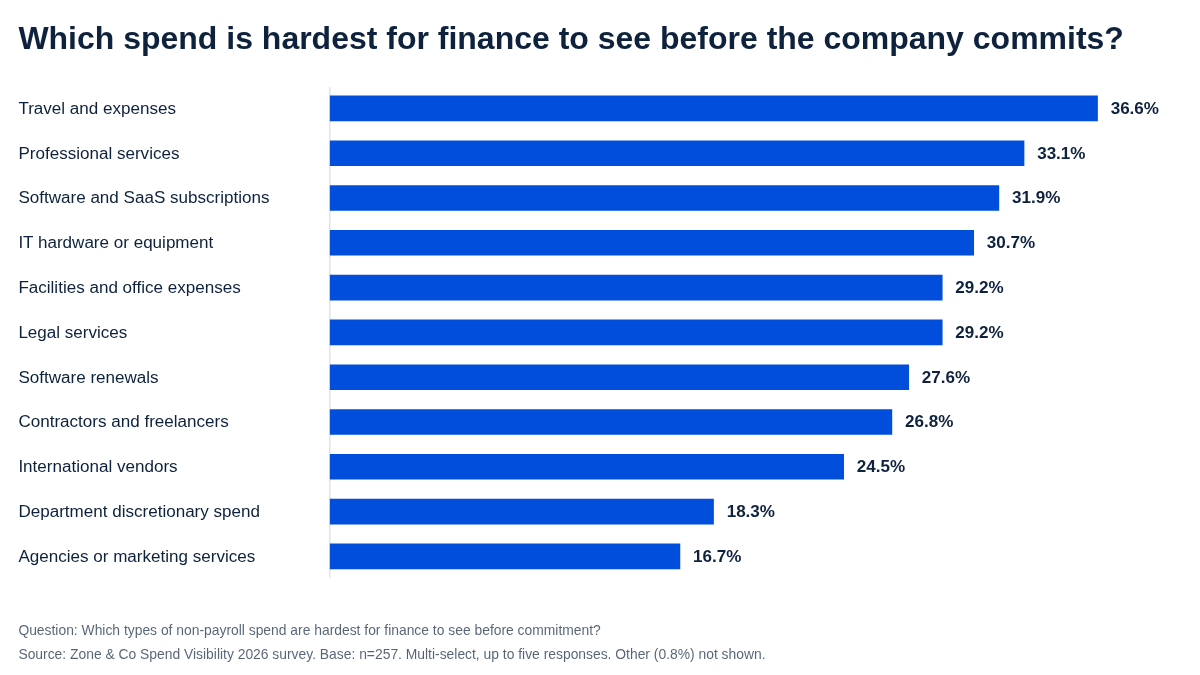
Travel and expenses topped the list at 36.6%. Because travel and employee expenses can follow their own booking and expense workflows, the examples that follow focus on vendor and contract purchases – the ones where finance and procurement can get involved early and influence the buying process.
Within those purchases, finance may still get involved at very different points. New equipment might reach finance as a purchase request showing the supplier and the quote, with the order still open. But when a facilities director signs a new cleaning contract for the campus, finance may only see it after the first bill arrives, long after the decision’s been made.
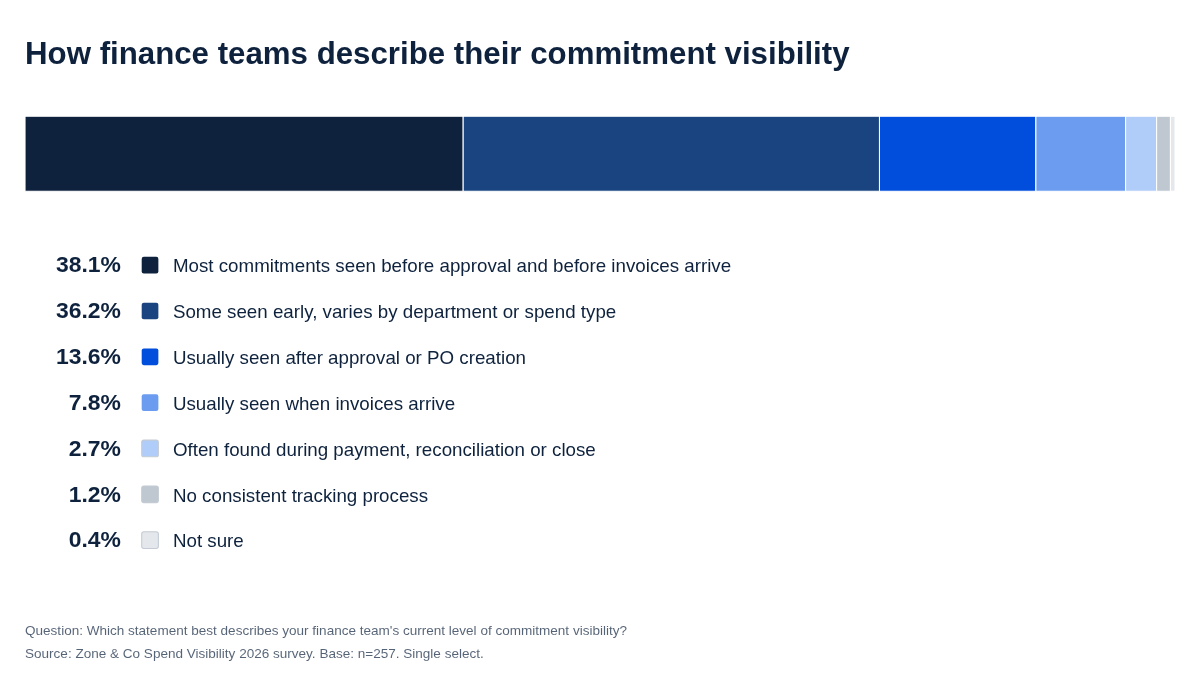
The data also shows how uneven spend visibility can be. Only 38.1% of finance teams said they see most commitments before approval and before invoices arrive. Another 36.2% said they see some commitments early, though it depends on the department or the type of spend. Nearly 25% say they usually see spending after approval, PO creation, when invoices arrive or later.
Visibility gaps can create issues in budgeting and forecasting, too. A budget may still show room even when another purchase is in motion, so the next request can be approved against money that's been committed. The forecast can end up behind what's really happening in the business before anyone realizes it.
How to catch spend earlier
To cut down on spending blind spots, finance often needs the same purchase details procurement already collects, early enough to use it. Here are a few ways to get the right information flowing into finance.
- Give employees a clear place to start a purchase. Build one intake path everyone uses, whatever the department. Have it collect the vendor, the rough cost and the budget owner while the team is still deciding. A common intake process gives finance and procurement an earlier look at requests coming from across the company.
- Connect procurement information with the financial view. Procurement may already know the vendor, contract terms or renewal date. Finance knows the budget and how the expected spend fits the plan. When the request carries both, a reviewer can see the contract terms and the budget line in one place instead of piecing it together from two systems.
- Create a review process that fits the purchase. Work out what each type of purchase needs, then match the reviewers to it. For example, a routine discretionary purchase may only need sign-off from the budget owner and manager, while a new international vendor could also need legal, security and procurement reviews. That way, the right people can weigh in before the spend is committed.
- Make routing automatic. Set your routing rules by purchase type and amount, so every request reaches the right reviewers, whichever department it comes from. That reduces the need for people to remember when legal, security or procurement needs to get involved. It also cuts down on requests being passed around from one team to another.
Together, those steps bring finance in early enough to check the budget and ask questions before the company commits.
A quick way to test your own spend visibility is to follow a handful of purchases that started in different parts of the business. For example, you might look at:
- a SaaS renewal coming up next quarter
- a contractor starting next month
- outside counsel brought in on a contract dispute
- an agency taking on a product launch
- a vendor your engineering team wants to start using
For each one, write down two dates. The first is when someone in the business knew the money was going to be spent. The second is when finance found out. Then ask yourself whether the vendor, price, scope or timing could still change at that point.
The answer tells you how much room finance actually had to influence that particular purchase. You’ll also see which spending categories give finance room to act, which ones arrive with the decisions already made, and where you might be able to bring finance in earlier.
Read the full report
The full Spend Visibility 2026 Report goes further into what happens when finance sees commitments late, how that timing affects budgets and forecasts and what teams that see commitments earlier tend to do differently.



.avif)