


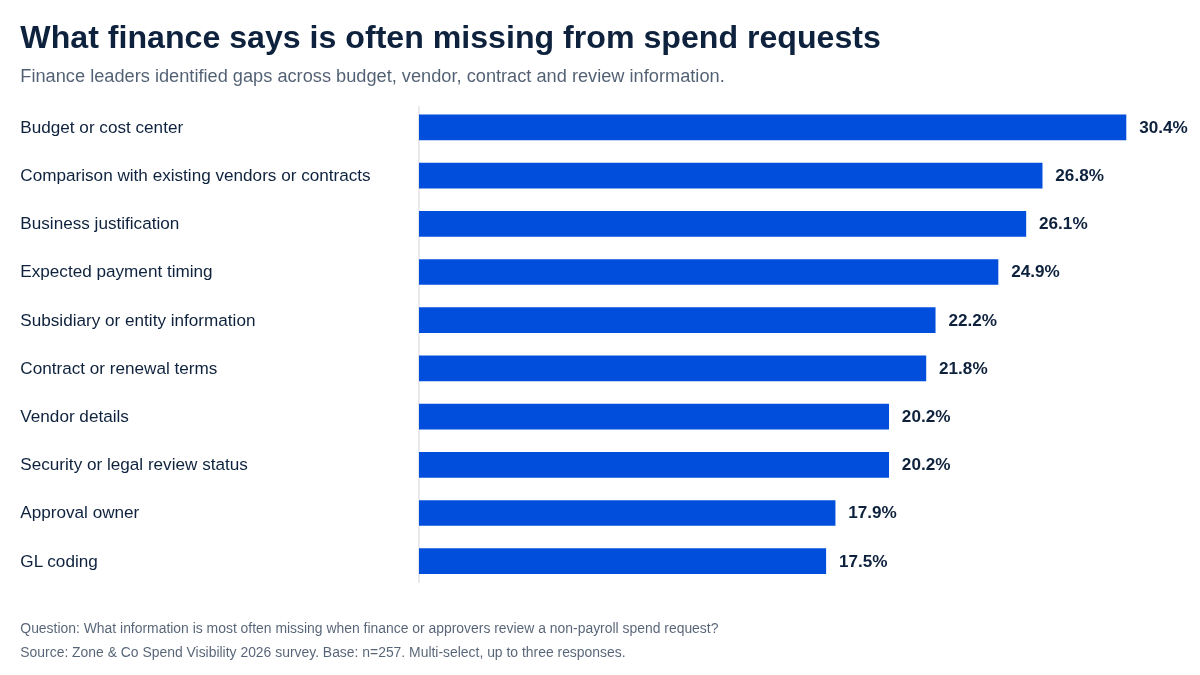
New survey data from Zone & Co shows that finance teams are often being asked to approve a purchase before it has all the information it needs. In our survey of 257 finance leaders, 91% said at least one type of information is often missing when finance or other approvers review non-payroll spend requests.
You can see what that looks like in a routine software purchase. A department has found the product it wants, talked through pricing and sent the request for approval. Finance opens it and starts checking whether it has enough context to decide, only to realize there are unanswered questions, like:
- Which budget is this coming from?
- Has legal reviewed the contract?
- Does security need to look at the vendor?
- Are we already paying for something similar somewhere else in the business?
Now the approval process includes people trying to decide whether the purchase should move forward while they’re still collecting the information they need to make that decision. And there’s usually more than one piece of info missing from the request. Nearly four in five respondents identified at least two types of missing information – and more than half identified three.

What’s missing when spend requests reach finance?
Respondents reported missing information in just about every part of the purchase. For one request, finance may be waiting for a budget or cost center, while another is missing contract terms, vendor details or the status of a legal or security review. That helps explain why approval follow-ups often involve several teams.
Missing context turns approval into follow-up work
When a request reaches approval without the information a reviewer needs, people have to stop and fill in the gaps before the decision can move forward. That means several extra steps involving several teams, including:
- The approver sends it back to the requester
- Procurement looks for an existing contract
- Legal asks for the agreement
- Security opens a separate review
- Finance waits for the budget owner
What is slowing approvals down?
Nearly every finance leader named a reason approvals are delayed. Only 4.7% said they don’t experience approval delays at all. When we asked about the causes, the most common reason given was budget uncertainty, but the answers were fairly evenly spread.
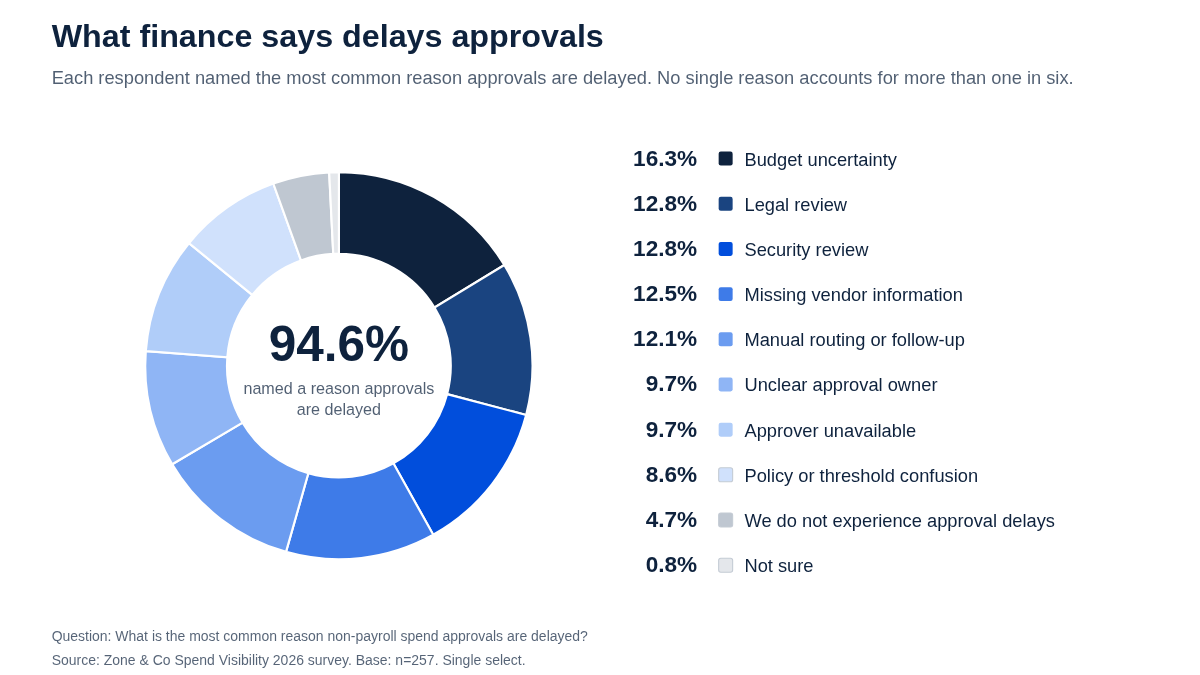
Several of the leading reasons involve missing information or follow-ups that have to be handled before the approval can move forward. Finance may be waiting for budget information, procurement may be looking for vendor details and security may still need basic facts to begin its review. All of that happens while the request sits in an approval queue.
Our data also shows that teams tend to see spend commitments late in the approval process. In the full Spend Visibility report, more than half of finance teams reported first seeing commitments at approval or later. At that stage, the vendor may be selected, pricing negotiated and the requesting department already planning initiatives around the purchase, creating more urgency and emergency approvals.
While finance can still approve or reject the spend, there’s less room to compare options, question the fit or check the budget.
How to speed up spend request approvals
Faster approvals start with giving reviewers the information they need before the request lands in their queue. Here are a few ways to do that:
- Define what a complete request looks like for each type of purchase. The requirements often vary with the purchase. A software request may need the vendor, expected cost, budget owner, contract and an indication of whether security review applies. A professional-services request may need a statement of work and a business justification.
- Collect the right information at the start. Employees shouldn’t need to know every procurement rule before they make a request. Your intake process can prompt them for the details that apply and carry them forward to the people who need them.
- Keep budget, vendor and contract information with the request. Give finance the budget owner and current budget context with the request so reviewers don’t have to look it up somewhere else. Include the contract so legal can review it without having to track it down. Attach vendor details and the status of required reviews to the request as well.
- Use information the business already has. If the ERP already holds the cost center, budget position or vendor record, bring that information into the request. That gives reviewers current financial context without creating another round of manual lookup or follow-up.
- Automate the repeatable parts. Once you define what each type of purchase requires, you can automate parts of intake, document handling and routing so the right details reach the people who need to review them.
By the time the request reaches the approver, the relevant information should already be there, the right reviewers should have been pulled in – and no one should have to reconstruct the purchase before approving it.
Read the full report
The full Spend Visibility 2026 Report looks beyond approval delays to when finance gains visibility into commitments, what happens when that visibility comes late and how procurement approaches affect finance’s ability to act before a purchase is locked in.



.avif)